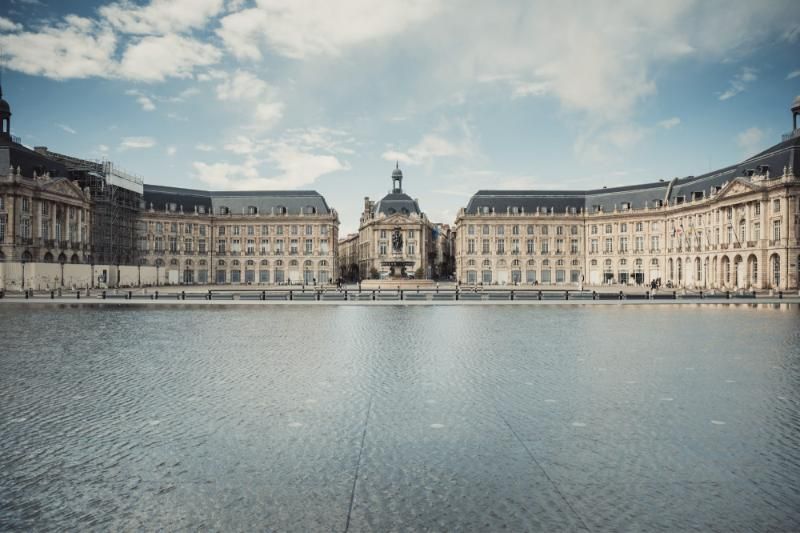
Yes. Banks lend to buyers living abroad for apartments in central Bordeaux, stone townhouses and coastal homes around Arcachon, on the same terms as elsewhere in France. Strong files from the UK, Ireland, the EU or Switzerland are commonly financed at 70–80%, and residents elsewhere at 50–70%. The difference in this region is wine: vineyards and agricultural businesses are financed as professional loans, assessed on accounts and a business plan, and a residential mortgage covers only the house.
What a mortgage in Bordeaux usually finances
Most foreign buyers looking for a mortgage in Bordeaux want an apartment in an 18th-century stone building in the centre, or an échoppe, the low stone townhouse typical of the city. Others look at second homes around the Arcachon basin and Cap Ferret.
Banks tend to see city property as easy to resell, and apartment files follow the familiar pattern: the 35% repayment ceiling, a maximum term of 25 years and purchase costs of 7–8.5% from your own funds. Apartments sit in a copropriété, so charges and any voted works on facades or roofs go into the budget.
Échoppes and renovation
Many échoppes come to the market needing work, from roofs and damp to a full rearrangement of the rooms. Lenders can fund that work when it is quoted before the loan offer, paying it out as invoices arrive. Without quotes, the works stay outside the plan and come from your savings.
Vineyards, châteaux and wine businesses
A vineyard is a business. Banks finance vines, wine stock and agricultural buildings as professional loans, usually through their agricultural lending teams, and assess them on accounts, yields and a business plan. A residential mortgage covers the house only.
If the property you want is a house with some vines attached, expect the bank to ask for the price to be split between the two. Agricultural land and vines can also be subject to the SAFER's pre-emption right, which the notaire handles and which adds time before completion. A company or SCI is often part of these purchases, and our SCI guide explains how banks lend to one.
Rental income in Bordeaux
Bordeaux applies rent control (encadrement des loyers) to long-term lets in the city, so the rent a bank counts has to sit within the cap. Banks commonly take around 70% of rent they can verify, from an existing lease or a letting agent's estimate.
The city also has its own rules on furnished tourist lets, and the Le Meur law of 19 November 2024 gave communes more power to restrict them. Banks often discount or ignore that income anyway, so base the plan on long-term rent or on your own income.
Next steps in Bordeaux
When you complete the eligibility check, say whether you are buying a home, a home with vines or a wine business, so the broker we introduce has the full picture. French Notaires can connect you with an English-speaking notaire in Bordeaux for the purchase. You can test repayments on the residential part with the mortgage calculator.
Your purchase deed is signed before a notaire. French Notaires matches English speakers with a bilingual notaire nearby, free of charge: Notaires in Bordeaux.
Questions
Can I get a mortgage in Bordeaux to buy a vineyard?
A residential mortgage can finance the house. The vines and any wine business are financed with a professional loan, assessed on accounts and a business plan, usually by a bank's agricultural lending team.
What is an échoppe?
It is the low stone townhouse typical of Bordeaux, often with a garden at the back. Many need renovation, which banks can include in the loan when the works are quoted before the offer.
Does rent control in Bordeaux affect my mortgage?
It caps the rent you can charge on a long-term let in the city. Banks base their figures on rent they can verify, commonly around 70% of it, so a projection above the cap will not help your file.